the toxies report
Take a look at our short, 5-page report, making the case for retiring “bad actor” chemicals that we released at the 2011 Toxies.
- The Case for Retiring “Bad Actor” Chemicals (pdf)
And Why We Need to Fundamentally Change the Way We Make and Regulate Chemicals
popular education & viewing parties
If you can’t join us in LA this year, the webisodes and related materials that will be posted on August 15 and will allow you to engage your community in a discussion about how we can be protected from toxic chemicals.
toxie awardee bios
bisphenol-a (BPA)
 Bisphenol-A (BPA) began her career as an estrogen impersonator in the 1930s.
She evolved into an incredibly versatile actor, now appearing in many major productions, including food packaging, water bottles, receipt paper, construction epoxies and more, making her a true grandame of the craft.
Her off-screen drama of heart disease, reproductive problems, cancer, thyroid issues, plus highly publicized dalliances with decreased sex drive, obesity and autism has led to overexposure, causing audience, reviewer, and producer fatigue.
A new wave of leading ladies have been found for some roles, and are actively being sought for others.
- Read the BPA resume/fact sheet:
English (pdf) | Spanish (pdf) - Learn more at Safer Chemicals Healthy Families
- Also see the National Library of Medicine Tox Town: Bisphenol-A
- Recent headlines at Environmental Health News
chloropicrin
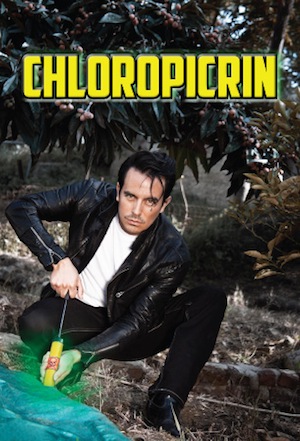
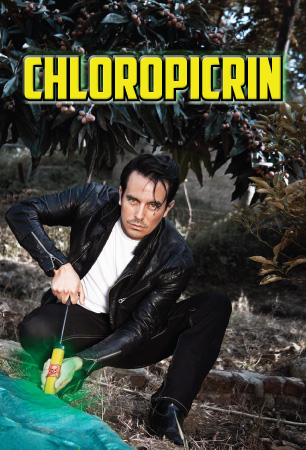 A guy who makes you cry, a man who takes your breath away and turns your stomach upside down. Why do we like bad guys so much? Chloropicrin had a brilliantly lethal debut as a warfare agent in WWI. But that was not enough for him, he evolved and trained to reappear as a prolific soil fumigant for crops such as strawberries, peppers, onions, tobacco and tomatoes. Who cares if he causes fields to be infertile? He will give you the best season of your life!
A method actor, his performances sink in – through inhalation, ingestion and dermal exposure. His power of seduction will reach you just by getting close to one of his fields. Of course, he is highly volatile and unpredictable, as several massive community poisonings have demonstrated, but it is a small price to pay when you are working with such a sensitive actor! We are glad that he didn’t give up after being awarded with a “Toxic Air Contaminant” by California in 2011 for being as carcinogenic as diesel exhaust. Even as younger non-chemical fumigants fight for a piece of stardom, Chloropicrin stands solid because his bad boy charm keeps him in the headline. Who wants a nice guy when you can get the one who makes you cry?
- Read Chloropicrin’s resume/fact sheet.
- Learn more at Pesticide Action Network of North America (PANNA)
- Also see the U.S. Environmental Protection Agency
- Recent headlines at Environmental Health News
dioxin
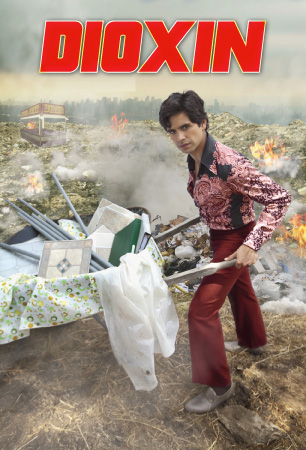 Dioxin’s got game. He’s been using the same cheesy pick up line since the ‘70’s. He debuted his deadly shtick as Agent Orange in Vietnam then made a splash at Love Canal! Dioxin sneaks up on you and then makes his move just as you turn away from your drink. He’s the seemingly normal guy at the bar, but beware, this gigolo is full of byproducts of the industrial process that will stay with you long after you have been exposed to them.
That’s right, Dioxin is a legacy chemical. He travels through the food chain entering the air through the burning of waste or disposal of PVC (vinyl) plastics. He seeps into the animal food supply. Then we unwitting humans get a taste of it in our dairy and meat. The saddest part about Dioxin is that once you’ve been exposed, your experience with Dioxin stays with you for a very long time. No visit to a doctor is going to fix that. With his incredible staying power, you may be at risk for carcinogenic, reproductive, developmental, immunological, and endocrine side effects.
- Read Dioxin’s resume/fact sheet: English (pdf) | Spanish (pdf)
- Learn more at the Center for Health, Environment & Justice (CHEJ)
- Also see the National Library of Medicine Tox Town: Dioxin
- Recent headlines at Environmental Health News
formaldehyde
 Formaldehyde is a seasoned performer but she still has the goods to deliver toxins around the world. Used for 150 years in embalming fluid, adhesive, fungicide, germicide and disinfectant, she has turned what should have been the twilight of her career into a resurgence.
She has been tapped to appear in many common products, including particle board used for certain cribs and changing tables, paints, cleaning supplies, and some beauty products such as nail polish in which she shines as a member of the “Toxic Trio” and brazilian blowout.
Depending on her specific role, Formaldehyde is an acting chameleon, having been linked to asthma and various types of cancers. A true classic, her name has long graced California’s Proposition 65 List.
- Read Formaldehyde’s resume/fact sheet: English (pdf) | Spanish (pdf)
- Learn more at the Natural Resources Defense Council (NRDC)
- Also see the National Library of Medicine Tox Town: Formaldehyde
- Recent headlines at Environmental Health News
fracking chemical cocktail
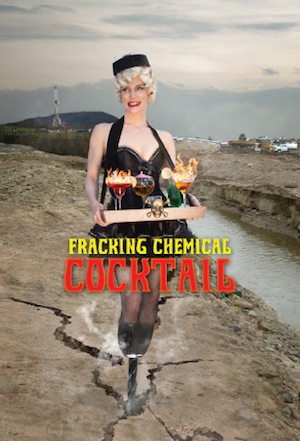
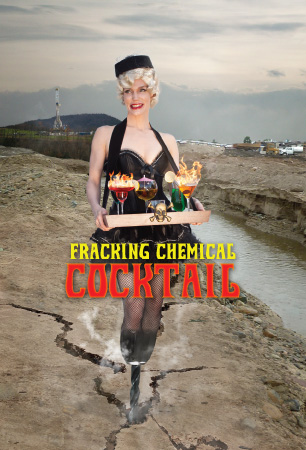 Leading roles abound, magazine covers every week, and the kinky tabloids about Mark Ruffalo’s fracked well! She is the “it” girl! Her secret? Giving energy companies what they always wanted: previously inaccessible hydrocarbons from hard rock formations. How? With her intoxicating mix of chemicals, drilling skills, and massive volumes of water. With so many charms, who cares about the methanol, diesel, xylene, formaldehyde, sulfuric acid and the more than 600 other chemicals and radioactive isotopes being released into groundwater and the air in the process? “Energy independence” served with elegant discretion. Thanks to “trade secret” laws she can keep her toxic formulas for herself.
Big oil companies and their friends know a star when they see one and would do anything to support her career, including making her exempt from the Safe Drinking Water Act. So she can perform anywhere: by your favorite river, close to home, communities, farms, water supplies and even for a romantic getaway offshore. A bit of gossip? Well, with so much drilling and fracturing the chances of earthquakes multiply, but who doesn’t like a girl with some temper?
genetically modified organisms (GMOs)
 GMOs firmly believes you never ask a lady her age…or genetic status. She very much appreciates the FDA relying on GMO-producing companies to conduct their own safety research. Classy! They always make her look her best and ignore the “little” things such as the fact that lab animals fed GMOs show reproductive disorders, immune dysfunction, cellular and metabolism changes or that B-toxin is found in the blood of pregnant women and fetuses. She doesn’t understand why nine out of ten Americans want GMOs labeled. A lady should be able to have some beauty secrets! Plus, it may ruin her career as it did in Europe.
She is so sweet and naïve! She really believes she is reducing hunger but GMOs have absolutely failed to increase crops’ yield. She is resistant to very toxic pesticides so genetically modified food carries higher toxic residues and forces the usage of stronger pesticides and the creation of “superweeds”. Ironically, the UK Monsanto restaurant does not serve GMOs per the company’s workers request. That’s so rude! Shhh, don’t tell her.
halogenated flame retardants (HFRs)
 Oh Halogenated Flame Retardants. She’s a killer hiding behind a mask of good intention. Relaxing in our homes all day, every day, then running in, pretending she can stop a fire! Save children! Keep your lit cigarette from setting your mattress ablaze! But let’s be honest, HFRs is a mess — a hot mess. She’s so clingy and needy, hanging on everything and getting all up in your business, covering you and anything that crawls from babies to kittens. Laying your head on a HFRs laced mattress or couch can be toxic to your brain, endocrine and reproductive systems and has detrimental effects on your thyroid and liver function. “Snap, did I do that?” Yes, HFRs, yes you did.
HFRs shows up in car seats, strollers, nursing pillows, cribs and sleep positioners and leaves a trail of toxic footprints in her wake. Like Wonder Woman, HFRs’ producers have tried various makeovers to reinvent her image over and over again — PBDEs, Tris, FireMaster 550. But she’s still the same old HFRs underneath all of that hair dye and spandex. When a fire does catch, she’ll fill the place with smoke and toxic gasses, and you’ll be lucky to escape. As soon as HFRs spots those hunky firefighters on the scene, she is all too happy to cause a hot mess for their health too. In October 2011 she was awarded a well deserved spot on California’s Proposition 65 for her role as cancer causing Tris.
- Read the 2011 Halogenated Flame Retardants (HFRs) resume/fact sheet:
English (pdf) | Spanish (pdf) - Learn more at Green Science Policy Institute
- Also see National Library of Medicine Tox Town: PBDEs (one type of halogenated flame retardant, read more at Green Science Policy Institute.)
- Recent headlines at Environmental Health News
hexavalent chromium
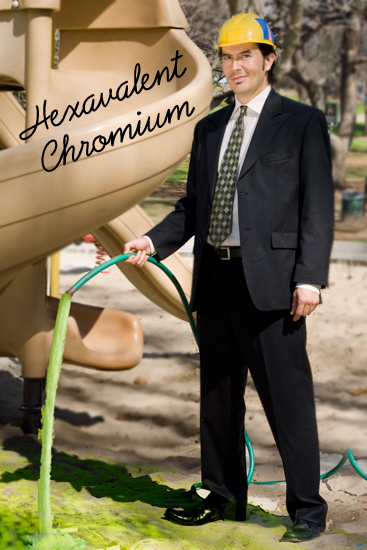 Hexavalent Chromium, also known as Hex Chrome or Chrome 6, smashed onto the scene making his movie debut in 2000, playing the villain in the movie Erin Brockovich. His performances in industrial processes earned him a spot on California’s Proposition 65 List in December 2008 and the reputation of a hard hitting bad boy.
On high demand, Hex Chrome has touched the lives of many through inhalation, ingestion, and dermal contact around communities and schools. He boasts 2,208 appearances in monitored drinking water sources, and being taken in by more than 33 million Californians between 1998 and 2003. Hex Chrome is a known carcinogen and reproductive toxicant for both males and females, and holds the record for being the most toxic form of the element chromium. Hex Chrome has solidified his role as the go-to bad boy of our generation.
hydrofluoric acid
 Hydrofluoric Acid (HF) recently starred in the movie Saw VI, in which he applied himself to melt body parts during a particularly memorable scene. Considered very difficult to work with, this diva of a compound is highly corrosive and has a history of destruction. HF stars in productions of high-octane gasoline, refrigerants, herbicides, pharmaceuticals, aluminum, plastics, electrical components, and fluorescent light bulbs.
Volatile and unpredictable, HF’s personal life has not been much better. His marriage woes were splashed all over the tabloids when his wife filed a restraining order against him after finding out that splashes of HF on the skin can be fatal. HF has also gained a reputation around town among the ladies as “Creepy-Crawler”– those who survive after HF inhalation often suffer lingering chronic lung disease.
lead
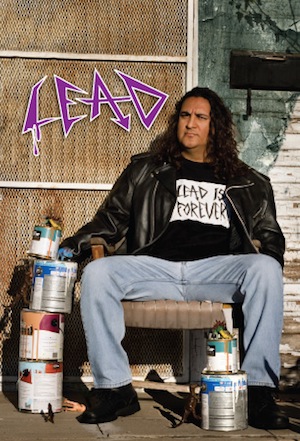
 Lead has solidified his place as one of the most versatile, household names in bad acting. He has touched and poisoned the lives of millions from Ancient Rome to today’s urban dwellings – Silverlake, watch out! Even though his performances have been recognized as toxic for hundreds of years, his complex ability to cause damage has only recently been understood. So subtle were his performances, that before anyone knew it, Lead had penetrated everything from paint, piping, children’s toys, baby bibs, jewelry, handbags, lunchboxes, artificial turf, wheel weights, lipstick, candy, and a range of industrial applications.
Lead has a profound ability to damage children’s intellectual and behavioral development, and even though banned in paint during the 70s, leaded paint is still the leading cause of childhood lead poisoning. Serious, parental discretion is advised. No safe threshold for Lead has ever been discovered, and his performances continue to be linked with learning disabilities, infertility, cancer, and increased risk of heart attacks. Lead is a proud, charter member of California’s Proposition 65 List.
- Read the Lead resume/fact sheet.
English (pdf) | Spanish (pdf) - Learn more at the Center for Environmental Health
- Also see the National Library of Medicine Tox Town: Lead
- Recent headlines at Environmental Health News
mercury
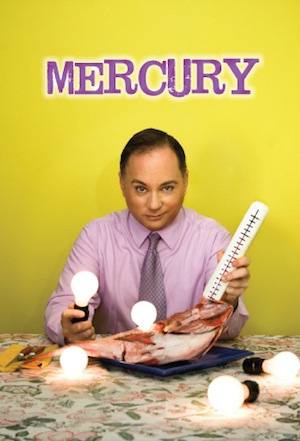
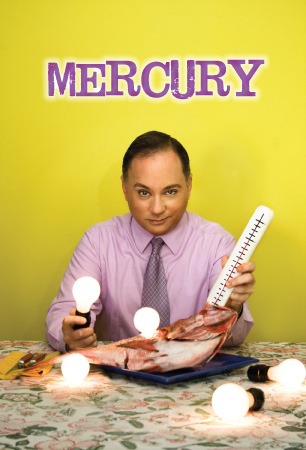 Mercury’s performances leave maddening effects on audiences around the world. Although his reputation for causing nervous system damage and birth defects precedes him, many still don’t appreciate Mercury’s continued stardom. A slick character, his metal beginnings are as a shiny, silvery, odorless liquid, but he’s versatile enough to become a colorless, odorless gas when heated. And with this leading man’s temper, that happens all the time. His airborne roles occur during coal burning and waste incineration. Keep an eye out for him in fluorescent light bulbs, thermometers, dental fillings, batteries, auto switches, and more. With the help of bacteria in the environment, Mercury shows his versatility by changing roles to Methyl Mercury where his toxic charms are most apparent and damaging. Wearing this outfit, Mercury builds up, or bioaccumulates, in fish and other animals and gets passed up the food chain where people get more exposure than they bargained for, including in your tuna fish sandwich! He is found in almost everyone’s body, demonstrating his ability to really get under your skin. So, combined with airborne effects, Mercury puts about 60,000 children born each year at risk for his harmful and potentially permanent neurodevelopmental effects. With his staggeringly effective performances, this special kind of actor drives audiences crazy.
- Read Mercury’s resume/fact sheet:
English (pdf) | Spanish (pdf) - Learn more at the Natural Resources Defense Council (NRDC)
- Also see the National Library of Medicine Tox Town: Mercury
- Recent headlines at Environmental Health News
methyl iodide
 Methyl Iodide has been ready to unpack his bags in California, but has been kept off the set for his cancer-causing ways. Only recently he appeared on the scene as a soil fumigant, registered in the final days of the Bush administration for use as a pesticide. Prior to his agricultural debut, he was used in industrial processes and laboratory research settings where, among other uses, Methyl Iodide was employed to induce cancer.
His propensity to produce cancer has landed him a spot on California’s prestigious Proposition 65 List, and he’s associated with neurotoxic effects and thyroid disease. Methyl Iodide is currently taking method classes at the Ag Actors Warehouse and auditioning as Methyl Bromide’s understudy in California’s strawberry fields.
Learn more about Methyl-iodide.
nitrates
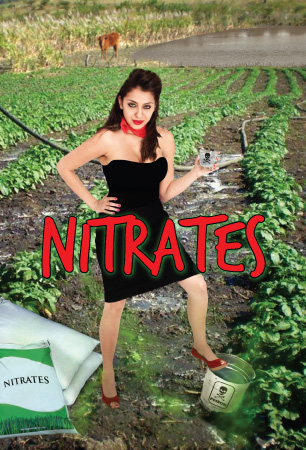 Nitrates will lure you with her “I’m composed of good things: oxygen and nitrogen” line just to suck your oxygen away. Let’s face it, she is a sexy synthetic fertilizer. She got California’s agriculture so addicted that she’s exempt from regulations that are meant to protect water sources. That is a starlet for you! She is also found in many food products, including bacon, cured meats and cheese products, and recent studies link her to Alzheimer’s disease, Parkinson’s disease, and diabetes. Now that’s a deadly doll.
Her capacity to interfere with blood’s ability to carry oxygen allowed her to achieve acting greatness in the “Blue Baby Syndrome”, but she also has graced us with such health effects as miscarriages, and thyroid disruption. Very notable too are her appearances as a fish killer and as a facilitator for algae blooms that suck the oxygen out of the aquatic ecosystem. And she has this little thing for rural, low-income communities. She enjoys enormously supplying them with the most toxic water. With such agents as the powerful synthetic fertilizer industry it is clear that recent efforts to monitor her won’t stop her career. Whatever the future may bring, she already has such a presence in our environment that we can rest assured she will be leaching into our waterways for years to come. Oh yes!
- Read Nitrates’ resume/fact sheet.
- Learn more at Community Water Center (pdf)
- Also see the U.S. Agency for Toxic Substances and Disease Registry (ATSDR): ToxFAQ Nitrates and Nitrites
- Recent headlines at Environmental Health News
nmp
 N-Methyl Pyrrolidone (NMP) is an industrial solvent used extensively in chemical processing, and now makes frequent appearances as a paint stripper and graffiti remover. NMP has been kicking around for decades – usually in supporting, character roles or as a ‘catalyst” in chemical mixtures whose other toxic ingredients got all the headlines.
In the 1990s, NMP made up 60% of certain photoresist mixtures used in the so-called ‘clean industry’ of semiconductor fabrication. NMP has recently come into his own as his reputation for reproductive and testicular toxicity has finally come out of the shadows. Currently, NMP is appearing as a graffiti remover.
perchlorate
 Perchlorate likes to get things started with a bang! She’s been typecast in action roles starring as an oxidizer in rocket fuel, explosives, airbags and fireworks. As ammonium perchlorate, she is also a major component of solid rocket fuel. Her performances as a bad actor chemical interfere with iodide uptake into the thyroid gland, causing hypothyroidism in mothers and negatively impacting proper childhood development such as decreased learning capability.
While no one denies Perchlorate’s ability to light up the sky and screen, her “special effects” aren’t contained…she’s made her way into the drinking water for tens of millions of Californians, and into the groundwater or soil of 43 states.
perchloroethylene
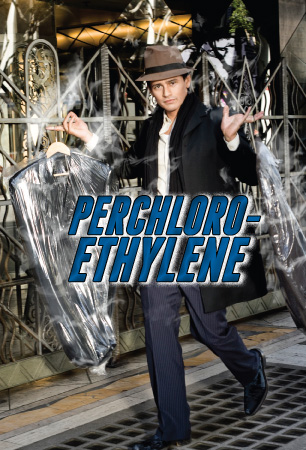 Perchloroethylene, Perc for short, is well known for keeping your clothes toxic…ahem…dry cleaned. His membership in California’s prestigious Proposition 65 List is just one claim to fame. Don’t be fooled by his charming smile and good looks – that dizziness and nausea you feel when you’re around him might actually be damaging your central nervous system, kidneys, liver, and reproductive system. The industry has lost wardrobe stylists all over town due to their unwillingness to work with Perc and his diva demands.
Perc is used in over 80% of the 35,000 cleaners in the United States, and is most often inhaled by the owners and workers in the dry cleaning industry, which are usually small mom and pop operations. He also leaves behind a toxic stain wherever he works, seeping into the ground and threatening our water supply. Attempts have been made to get rid of this bad actor only to be replaced by his buddies who pose other serious health threats or contribute to greenhouse gases. Perc and his buddies are trying to muscle out the next generation of actors trained in the much safer and healthier “wet cleaning” method, but Perc doesn’t want you to find this out!!
- Read the Perchloroethylene (Perc) resume/fact sheet:
English (pdf) | Spanish (pdf) - Learn more at the UCLA Center for Sustainable Technology.
- Also see the National Library of Medicine Tox Town: Perchloroethylene
- Recent headlines at Environmental Health News
pfc
 Perfluorinated Compound (PFC) represents a family of industrial strength bad actors widely used as water, stain and grease repellant for food wrap, carpet, furniture, and clothing. She is best known for her role as PFOA, aka Teflon, which can be found flaking off of nonstick pans in kitchens across the country. Once you see her in action, it will be hard to shake her. That wonderous “nonstick” performance leaves a lasting impression by accumulating in your body and the environment, described by the US EPA as combining “persistence, bioaccumulation, and toxicity properties to an extraordinary degree”.
PFC has signed a mulitpicture deal to harm major organs such as ovaries, liver, kidney, spleen, thymus, thyroid, pituitary, testis, and she keeps coming back for repeat performances since no one actually knows how to get rid of her! She has no known biological or environmental breakdown mechanism, which is good for studio bosses and bad for us.
phthalates
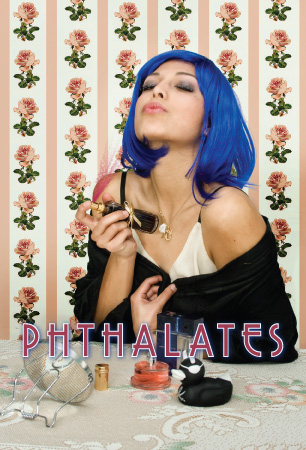 Phthalates represent a family of chemical bad actors who first entered the business in the 1920s — five members of her family have been inducted into California’s Proposition 65 List for causing cancer. Her most prominent roles include softening the scene in PVC/vinyl products and making PVC plastics more flexible. She’s starred in children’s toys, food packaging, vinyl shower curtains, and numerous medical devices. And that “new car smell”? Phthalates being released from a hot dashboard. A box office record, at least one Phthalates was found in 97 percent of people tested.
After being discontinued in some children’s toys, Phthalates is receiving widespread attention for her roles in fragrances, lotions, shampoos, nail polish, vinyl flooring, vinyl school supplies, air fresheners and cleaning products. As softening and sweet-smelling as she may appear to be, the Phthalates performances in these roles brings along cancer, asthma and reproductive harm, including male genital birth defects and other indications of demasculinization. That is some body of work.
polychlorinated biphenyls (PCBs)
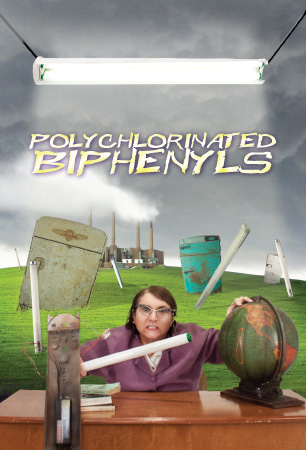 Like bad teachers of our childhood, PCBs has left us indelible marks. A cooling fluid for electrical parts, she was a big star in fluorescent light fixtures and electrical appliances. Despite being banned in the U.S. in the late 70s she can still be found in detectable levels in human blood, fat and milk for virtually everyone living in developed countries. Most people are still exposed to PCBs by eating contaminated fish, meat and dairy products. Due to wind and water currents, Alaska’s people and wildlife suffer from extreme levels of exposure.
We would like to remember her classic shows, but we can’t: PCB exposures have been linked to lower IQ, hyperactivity, shortened attention span and delayed acquisition of reading skills. Oh, yes! all those electrical parts that were not properly disposed… and the old fluorescent lighting fixtures never replaced from schools and offices. When memory fails there is the carcinogen element to bring her career under a new light. Such a remarkable trajectory deserved a “global phase out” by the Stockholm Convention for Persistent Organic Pollutants in 2001 and a third place on “Top Ten” list of environmental culprits that should be given high priority” by “Environmental Health Perspectives” magazine in 2012. It is about time for the highest honor of all: a Lifetime in Harm Toxie Award.
sodium hydroxide
 With a range of performances from detergents to personal products, Sodium Hydroxide is better known as the active ingredient in “lye” relaxers. As such, she brings with her the promise of straightforward beauty. She makes us dream on long shiny hair floating in the breeze of the morning, long strokes of brushing and cute ponytails. She embraces this role with such a fervor that we forget she is also an important part in the sink declogger business or that her performance is so corrosive that can dissolve through glass. Rumor has it that working with her is not easy, simple and clean, as it may appear on the box. She strongly believes that behind the scenes is nobody’s business.
Her curl-hate is legendary. Flat irons? Amateurs. Sodium Hydroxide goes for the molecules and when a hair has been relaxed, those natural curls won’t ever, ever be the same. Scalp scarring, lesions, hair loss and potential blindness, common consequences from frequent or improper use seem unimportant to her; straight beauty is her goal and motto. Slightly air headed, when recently asked about studies linking her with uterine fibroids in African Americans, she giggled.
toluene
 Toluene had a starring role 30 years ago in the horror classic, “Fetal Solvent Syndrome,” in which her appearances to pregnant moms was linked to brain damage and various birth malformations. She’s an organic solvent and thus a common ingredient in many paints, glues, cleaning products, and even nail polish, and has a knack for targeting your central nervous system with her toxicity.
Toluene has made a career for herself as the best friend who turns on her costars in the third act. Her name has graced the Proposition 65 List for several decades, and when she combines with her favorite bad girl actors (formaldehyde and dibutyl-phthalate), she more than doubles her damage as a member of the “Toxic Trio”. She’s also a close chemical relative of benzene, known for decades to cause leukemia. With that kind of family legacy, her agents hope to keep Toluene working for years to come.
trichloroethylene (TCE)
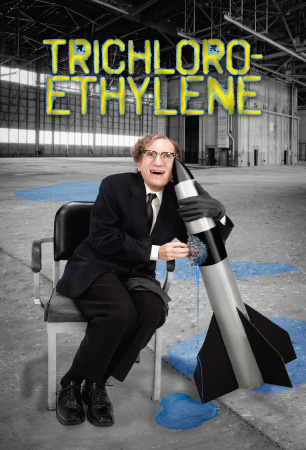 TCE is slick! Though he was fired from food and pharmaceutical uses in the 70s, he managed to keep the role of his life since the 20s as a degreaser of metal parts. TCE has enjoyed a love affair with the aerospace and military industries that has made him one their worst pollutants. He gets rocket engines and military equipment squeaky clean and in doing so he contaminates the soil, evaporates to the air and spills over into the water of surrounding communities, poisoning drinking water and helping to create hazardous Superfund sites. He is a generous lover, impacting military bases in dozens of states.
Don’t be fooled by his wimpy appearance, he is a serious actor. In small doses TCE can impair immune system function, damage liver and kidney, impairs fetal development and causes dizziness, lung irritation, headaches and poor coordination. In larger amounts it may cause impaired heart function, unconsciousness and death. Half a million workers are routinely exposed to TCE as he continues his romance with the rocket.
triclosan
 Since Triclosan’s debut role over thirty years ago, the FDA has allowed him to star in personal-care products, but has yet to implement a rule book for this bad boy. Companies cast Triclosan in a vast array of products we use on our skin and in our mouths, and on our babies and kids, even though he builds up in our bodies and has been linked to harm. His ties to cancer, thyroid disruption, and antibiotic-resistant “superbugs,” may have begun to impact his career.
Triclosan has played several roles as an antibacterial hero; fighting germs, mold and odor, but as it turns out, this so-called clean chemical plays dirty. His work has opened many doors for fellow bad actors, such as Dioxin, Methyl Triclosan and Chloroform. Critics have found that the hype around Triclosan’s supposed ability to prevent illness isn’t fully warranted: Triclosan is no more effective than the timeless performers, Regular Soap and Water.
ultrafine particulate matter
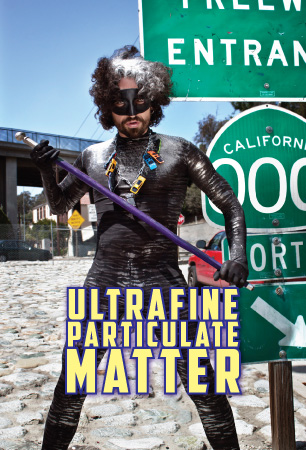 Ultrafine Particulate Matter is a villain, a trained evil villain. First of all, he is deceiving. As his older siblings, Particulate Matter 2.5 and Particulate Matter 10, he is generated by combustion, mostly by on-road cars, but his tiny size makes him ultra dangerous. He can sneak into places his sidekicks can’t, such as your blood stream and by concentrating his particulates, he has the capacity to affect larger areas of lung tissue.
Undetected for many years his performances flew under the radar. He attacks mostly close to his place of origin, usually freeways, light industry and waste sites on densely populated areas. His favorite victims? Working class communities. The worst thing is that he is no joker: travelling directly to all the organs, he exacerbates respiratory and cardiovascular diseases and is related with higher rates of asthma and mortality. Watch out, you may not see him but he will get you!